Tsavo West attractions give this park its special safari character because they mix springs, lava, rhino country, hills, lakes, and wide viewpoints.
Tsavo West is not only a wildlife park. It is also a landscape park. The best safari days here move between game drives and scenic stops. One route can include clear spring water, black lava, rhino habitat, volcanic hills, and sunset viewpoints.
The official Kenya Wildlife Service Tsavo West page lists Mzima Springs, Shetani Lava Flow, Lake Jipe, Ngulia Rhino Sanctuary, Roaring Rocks, Poacher’s Lookout, Five Sisters of Tsavo Hills, Chaimu Hill, rich wildlife, and 600 bird species among the park’s key features.
.For a wider park overview, start with our Tsavo West National Park safari guide. It explains routes, gates, wildlife, lodges, and best travel seasons.
Why Tsavo West Attractions Deserve Careful Planning
Tsavo West attractions are spread across a rugged park. They should not be planned as a rushed checklist.
Some Tsavo West attractions fit well into a short two-day safari. Others need more time because of distance, roads, and lodge location. Mzima Springs, Shetani Lava Flow, Chaimu Hill, Roaring Rocks, and Poacher’s Lookout can fit many classic routes. Lake Jipe may need more careful planning.
The best plan depends on your gate, lodge, and trip length. It also depends on whether your focus is wildlife, scenery, rhino conservation, birding, or photography.
Tsavo West attractions
Best for
Time needed
Route note
Mzima Springs
Families, scenery, hippos, birds
1–2 hours
Easy to combine with game drives
Shetani Lava Flow
Geology, photos, culture
30–60 minutes
Best in cooler hours
Chaimu Hill
Views, light hiking
1–2 hours
Avoid hot midday hours
Ngulia Rhino Sanctuary
Conservation, rhino habitat
2–3 hours
Sightings are never guaranteed
Roaring Rocks
Views, sunset, photos
30–60 minutes
Good late afternoon stop
Poacher’s Lookout
Views, conservation history
30–60 minutes
Pairs well with Roaring Rocks
Lake Jipe
Birding, water scenery
Half day or more
Best with enough route time
Five Sisters of Tsavo Hills
Landscape photos
20–40 minutes
Add during scenic drives
1. Mzima Springs: One of the Best Tsavo West Attractions
Mzima Springs is one of the most famous Tsavo West attractions. It feels like a cool secret inside a dry land.
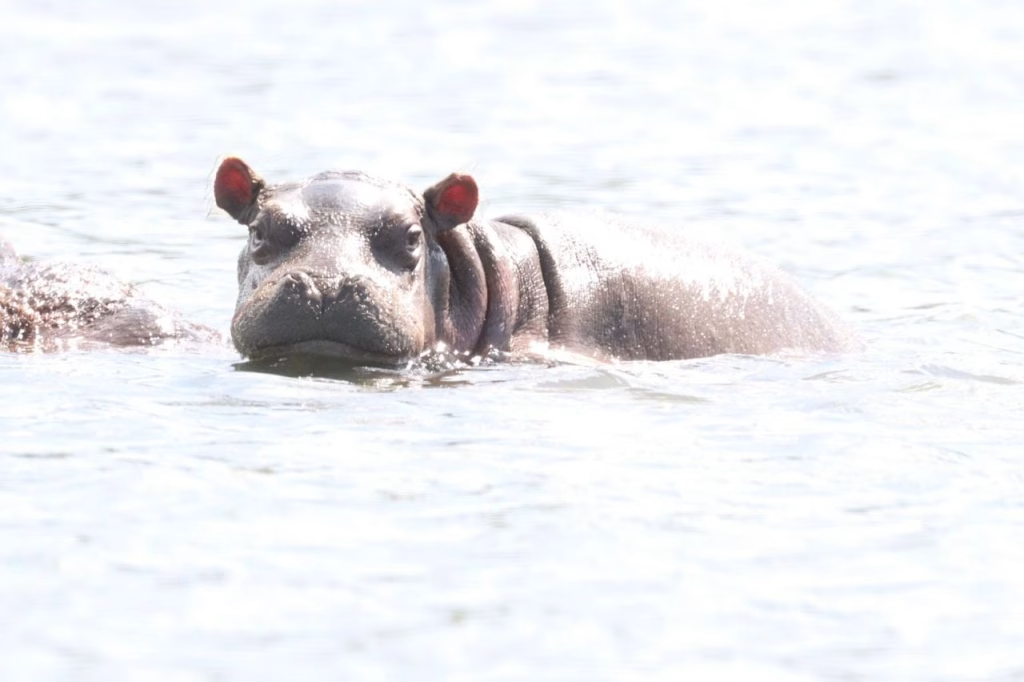
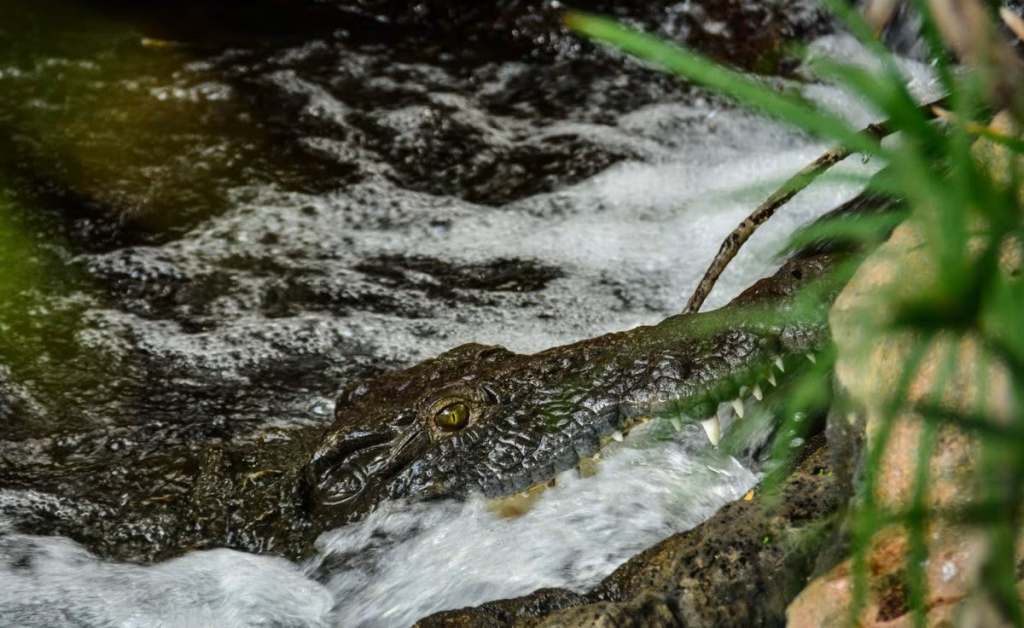
Clear water rises from below lava rock and forms a green oasis. The water supports hippos, crocodiles, fish, monkeys, and birds. The area can feel calm, but it is still wild.
Mzima Springs works well for first-time safari guests. It also works well for families because it adds variety to long game-drive days.
What makes Mzima Springs special?
Mzima Springs shows the water side of Tsavo West. That contrast is part of its appeal.
Many Tsavo West attractions show fire, rock, and heat. Mzima shows shade, water, and life. It helps visitors understand why this park feels so varied.
The spring area also gives travelers a chance to leave the vehicle. Walking slowly near the water makes the visit feel different from a standard game drive.
How to plan Mzima Springs
Visit Mzima Springs after a morning game drive or before a longer afternoon route. The stop can refresh the day.
Wear comfortable shoes. Carry water. Stay on marked paths. Give hippos and crocodiles space.
Mzima is one of the Tsavo West attractions that most visitors should include, even on a short safari.
2. Shetani Lava Flow: The Dark Volcanic Heart of Tsavo West
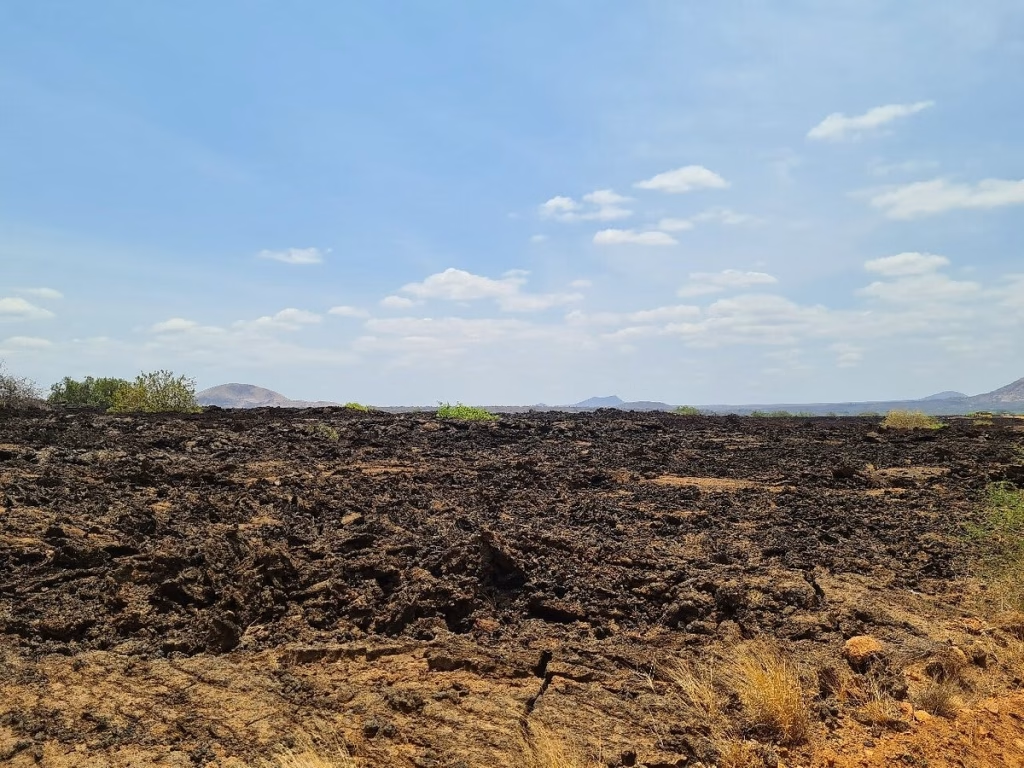
Shetani Lava Flow is one of the most striking Tsavo West attractions. It is a black lava field that cuts across the dry landscape.
The word “Shetani” means devil in Kiswahili. Local stories connect the name to the fiery force that shaped the lava field. KWS states that the molten lava spewed from the earth about 200 years ago.
This stop gives Tsavo West a strong volcanic identity. It also gives travelers a break from the usual search for animals.
What to expect at Shetani Lava Flow
The ground is rough, dark, and sharp. It looks like a frozen river of rock.
The scene can feel harsh under bright sun. Yet that harshness is part of its beauty. It reminds visitors that Tsavo West was shaped by fire as well as water.
This is one of the Tsavo West attractions where a guide adds value. A guide can explain the lava, folklore, and safety points.
How to plan Shetani Lava Flow
Visit in the morning or late afternoon. Midday heat can make the rock uncomfortable.
Wear closed shoes. Avoid sandals. Watch every step because the lava can be uneven.
Shetani Lava Flow is one of the best Tsavo West attractions for photography, geology, and storytelling.
3. Chaimu Hill: A Short Climb with Wide Views
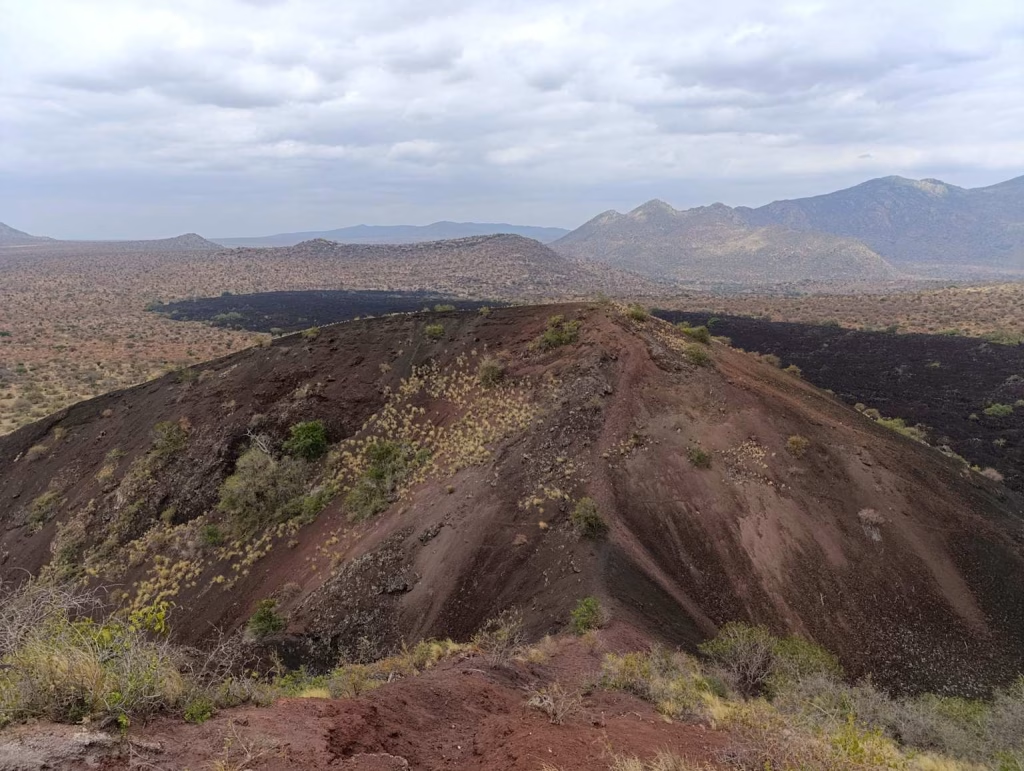
Chaimu Hill is one of the most rewarding Tsavo West attractions for active travelers. It is a black lava hill with sweeping views.
Campo’s destination page describes Chaimu Crater as a black lava hill that visitors can hike for a panoramic view of the park.
The walk is not about a long climb. It is about seeing Tsavo West from above. From higher ground, the park’s shape becomes clearer.
Why Chaimu Hill is worth the effort
Many safari days happen inside a vehicle. Chaimu Hill gives you a chance to stretch and look across the land.
You may see plains, rocky ground, bush, hills, and distant routes. The view helps explain why Tsavo West attractions feel so different from each other.
The climb also gives photographers a strong angle. It works well for wide landscape shots and safari portraits.
How to plan Chaimu Hill
Plan Chaimu Hill in the morning. The black lava ground can heat up fast.
Carry water. Wear firm shoes. Move slowly on loose ground.
Chaimu Hill is one of the Tsavo West attractions that adds movement, height, and perspective to a safari.
4. Ngulia Rhino Sanctuary: A Conservation-Led Attraction
Ngulia Rhino Sanctuary is one of the most important Tsavo West attractions. It gives the park a clear conservation role.
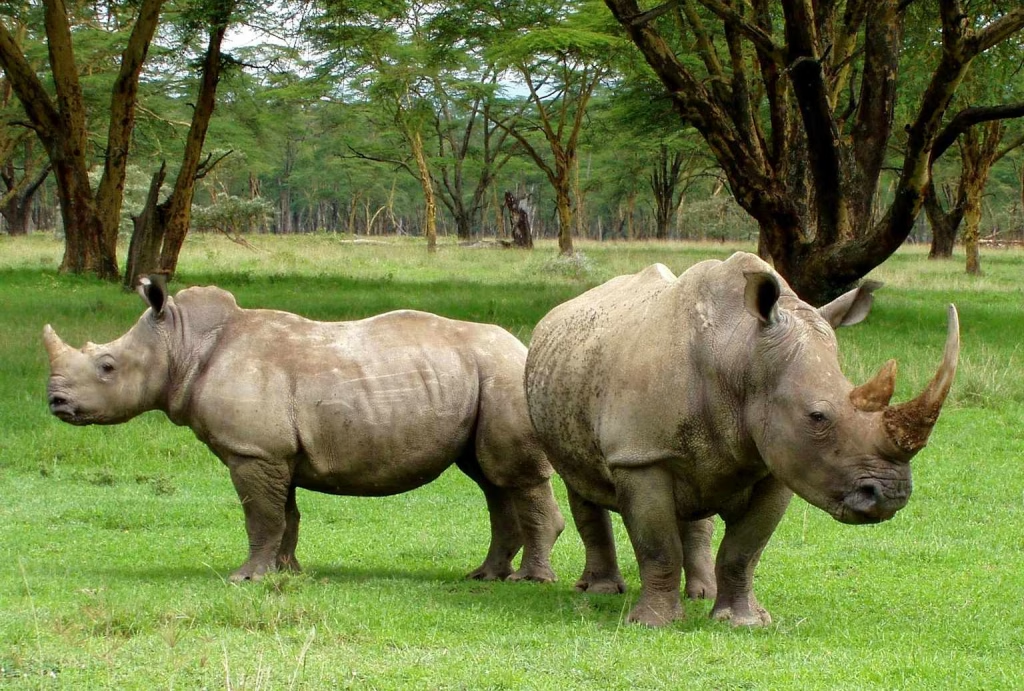
The sanctuary protects highly endangered black rhinos. KWS identifies Tsavo West as home to Ngulia Rhino Sanctuary and a growing black rhino population.
Rhino sightings are never guaranteed. The area is large, and rhinos can be hard to spot. Still, the visit adds meaning to a safari.
Why Ngulia Rhino Sanctuary matters
A rhino-focused route teaches travelers about protection, habitat, and patience. It also shows why conservation needs space, money, and time.
This is not a zoo-style attraction. It is a wild area with a strong purpose. That makes the visit deeper.
A good guide can explain black rhino behavior, threats, patrol work, and viewing ethics. That context turns the drive into a learning experience.
How to plan Ngulia Rhino Sanctuary
Your lodge location matters. A poor base can make the drive long and tiring.
Ngulia Rhino Sanctuary is one of the best Tsavo West attractions for conservation-minded travelers.
5. Roaring Rocks: A Viewpoint for Big Safari Landscapes
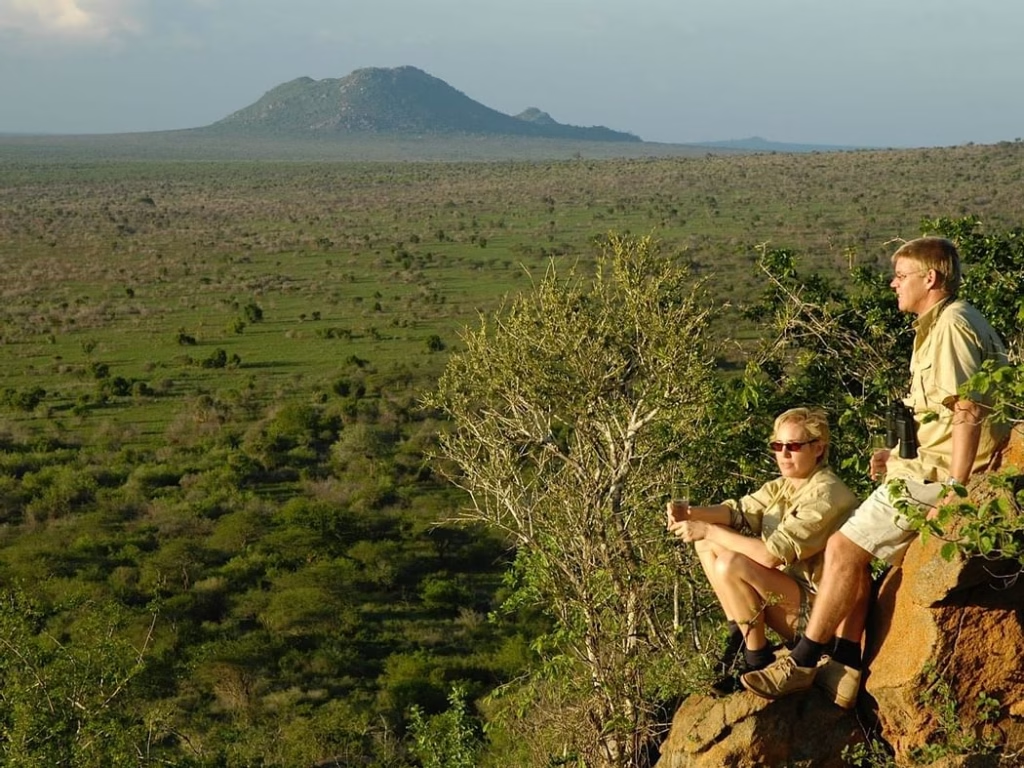
Roaring Rocks is one of the most scenic Tsavo West attractions. It gives travelers a wide view over hills, plains, and wildlife routes.
KWS describes Roaring Rocks and Poacher’s Lookout as panoramic vantage points. These viewpoints help visitors see scenic topography and wildlife movement.
The value of Roaring Rocks is not only the view. It also changes how you understand the park.
What makes Roaring Rocks special?
Game drives can make people look only for animals. Roaring Rocks makes people look at the whole land.
From a raised viewpoint, Tsavo West feels layered. You see ridges, valleys, plains, bush, and sky. The view can be quiet and powerful.
It is also a strong stop for landscape photography. Late afternoon light can add warmth and depth.
How to plan Roaring Rocks
Visit Roaring Rocks late in the day when possible. The sun angle is better for photos.
Do not rush the stop. Spend a few minutes watching light, wind, and movement.
Roaring Rocks is one of the Tsavo West attractions that gives a safari its sense of scale.
6. Poacher’s Lookout: Views with a Conservation Story
Poacher’s Lookout is one of the Tsavo West attractions that blends scenery with history. It is also a good place to discuss wildlife protection.
The name points to a difficult part of conservation history. Today, the stop helps visitors think about how large wild spaces are watched and protected.
Poacher’s Lookout also offers broad views. Like Roaring Rocks, it helps guests read the land from above.
Why Poacher’s Lookout is worth a stop
This is not only a photo point. It is a storytelling point.
Ask your guide about wildlife movement, patrol work, and why high ground matters. Ask how rangers protect huge areas with limited resources.
Such conversations can make a safari more thoughtful. They help connect travel to conservation.
How to plan Poacher’s Lookout
Poacher’s Lookout works well with Roaring Rocks. The two Tsavo West attractions can fit into a scenic drive.
Late afternoon is a strong time for both. The views gain color, and the heat begins to drop.
This stop suits travelers who enjoy views, history, and slow safari moments.
7. Lake Jipe: A Birding and Water-Based Highlight
Lake Jipe is one of the most useful Tsavo West attractions for birders. It lies along the Kenya-Tanzania border and has rich water life.
KWS notes that Lake Jipe teems with aquatic life. KWS also says bird watching is a major activity around the lake.
Lake Jipe may not fit every short safari. Yet it can be a strong choice for travelers with more time.
What makes Lake Jipe different?
Lake Jipe changes the safari mood. Water slows the pace.
Birders can scan reeds, shores, and open water. Photographers can look for reflections, distant hills, and wetland scenes. Wildlife lovers may enjoy the shift from dry bush to lake habitat.
This is one of the Tsavo West attractions that rewards patience. It is not a quick drive-by stop.
How to plan Lake Jipe
Tell your planner early if Lake Jipe matters. Your gate, lodge, and route should support it.
Carry binoculars and a bird guide. Plan a slower morning rather than a rushed afternoon.
Lake Jipe is one of the best Tsavo West attractions for repeat safari guests and bird watchers.
8. Five Sisters of Tsavo Hills: Volcanic Shapes and Safari Photos
The Five Sisters of Tsavo Hills are among the most scenic Tsavo West attractions. They add form and character to the park’s skyline.
KWS describes the Five Sisters as volcanic hills that offer a scenic backdrop for wildlife photography.
These hills may not require a long stop. Yet they can make your photos feel more rooted in Tsavo West.
Why the Five Sisters matter
Safari photos often focus only on animals. The Five Sisters help show where the animals live.
A giraffe, elephant, acacia tree, or safari vehicle can look stronger with volcanic hills behind it. The hills also help explain the park’s volcanic past.
This is one of the Tsavo West attractions that works best as part of a drive. You do not need to build a whole day around it.
How to photograph the Five Sisters
Use the hills as a background. Wait for wildlife, trees, or light to create balance.
Morning and late afternoon are best. Midday light can make the land look flat.
The Five Sisters are ideal for travelers who want simple but strong landscape images.
Suggested Routes for Tsavo West Attractions
The best Tsavo West attractions route depends on trip length. A good route avoids wasted time and rushed stops.
One-day route for Tsavo West attractions
A one-day route should stay focused. Choose Mzima Springs, Shetani Lava Flow, Chaimu Hill, and one viewpoint.
This route gives water, lava, hiking, and views. It also leaves room for game drives.
Avoid adding Lake Jipe on a short day unless your route already supports it.
Two-day route for Tsavo West attractions
Two days give a better safari pace. Use one day for Mzima Springs, Shetani Lava Flow, and Chaimu Hill.
Use the second day for Ngulia Rhino Sanctuary, Roaring Rocks, and Poacher’s Lookout.
This route balances scenery, conservation, and wildlife. It also gives time for rest at the lodge.
Three-day route for Tsavo West attractions
Three days allow a richer plan. Add Lake Jipe, more birding, and slower game drives.
You can also link Tsavo West with nearby areas. Read our guide to things to do in Tsavo West for more activity ideas.
A three-day route is best for travelers who want depth, not just highlights.
How Tsavo West Attractions Compare with Tsavo East
Tsavo West attractions feel different from Tsavo East highlights. Tsavo West has more hills, springs, lava, viewpoints, and rhino-focused routes.
Tsavo East is better known for open plains, red elephants, and long wilderness views. You can compare the two parks in our Tsavo East National Park guide.
Many travelers combine both parks. This creates a stronger Tsavo safari because each side offers a different mood.
For wider route planning, browse Campo’s Kenya safari destinations. It can help you link Tsavo West with Amboseli, Taita Hills, or the coast.
Want to see the best Tsavo West attractions in the right order? Let Campo East Africa Safaris plan your lodge, route, game drives, and travel timing. Start with our Wildlife Safari options, or contact us to build a custom Tsavo West safari.
FAQs About Tsavo West Attractions
What are the main Tsavo West attractions?
The main Tsavo West attractions include Mzima Springs, Shetani Lava Flow, Chaimu Hill, Ngulia Rhino Sanctuary, Roaring Rocks, Poacher’s Lookout, Lake Jipe, and the Five Sisters of Tsavo Hills.
What is the most famous attraction in Tsavo West?
Mzima Springs is one of the most famous Tsavo West attractions. It is known for clear water, hippos, crocodiles, fish, birds, and shaded paths.
Is Shetani Lava Flow worth visiting?
Yes. Shetani Lava Flow is one of the most unique Tsavo West attractions because it shows the park’s volcanic past.
Can you see rhinos in Tsavo West?
Yes, Tsavo West has Ngulia Rhino Sanctuary. However, rhino sightings are never guaranteed because the sanctuary is a wild area.
Is Lake Jipe worth visiting?
Lake Jipe is worth visiting for birding, water scenery, and slower safari travel. It works best when your route allows enough time.
Which Tsavo West attractions are best for photography?
The best Tsavo West attractions for photography include Roaring Rocks, Poacher’s Lookout, Five Sisters, Shetani Lava Flow, Chaimu Hill, and Mzima Springs.
How many days do you need for Tsavo West attractions?
Two nights are enough for the main Tsavo West attractions. Three nights are better for Lake Jipe, birding, Ngulia routes, and slower game drives.
Things to do in Tsavo West go far beyond game drives because this park blends lava fields, clear springs, rhino country, hills, lakes, and wide viewpoints.
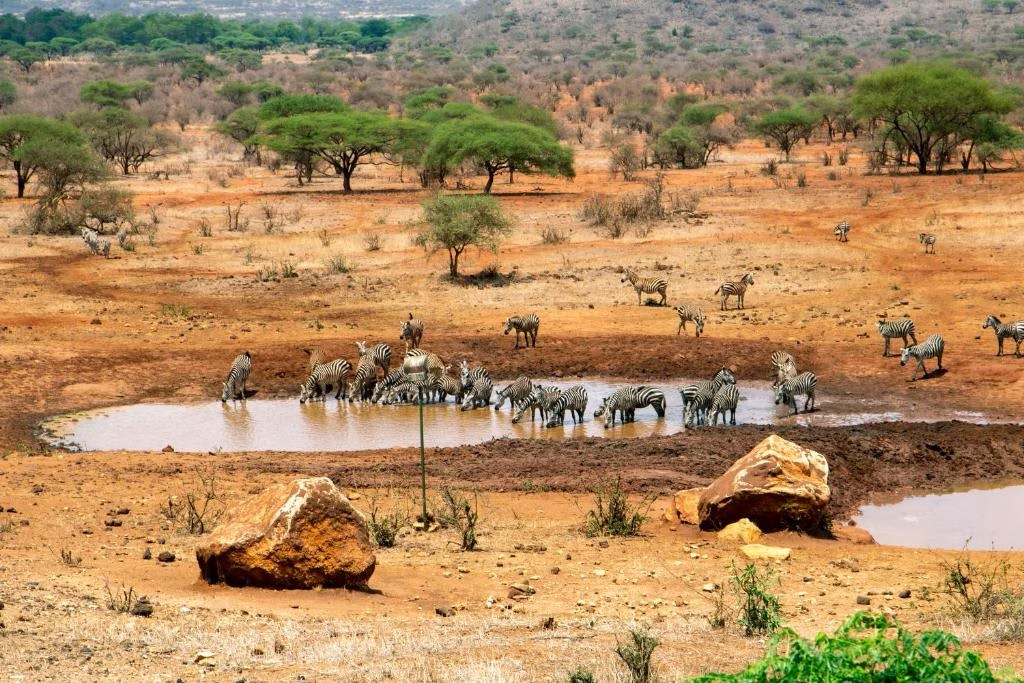
Tsavo West National Park is one of Kenya’s most scenic safari parks. It is rugged, volcanic, green in places, dry in others, and full of useful stops for travelers who like variety. One hour can begin with elephants on red soil. The next can place you beside clear spring water, black lava, or a hilltop viewpoint.
The best things to do in Tsavo West include wildlife drives, Mzima Springs, Shetani Lava Flow, Chaimu Hill, Ngulia Rhino Sanctuary, Roaring Rocks, Lake Jipe, and nearby night-drive experiences. Kenya Wildlife Service lists the park’s wildlife, 600 bird species, Shetani Lava Flow, Lake Jipe, Roaring Rocks, Poacher’s Lookout, Five Sisters, and Chaimu Hill as key features of Tsavo West National Park. (Kenya Wildlife Service)
For a wider park overview, start with our Tsavo West National Park safari guide. It explains wildlife, gates, accommodation, best time to visit, and route planning.
How to Plan Things to Do in Tsavo West
The best things to do in Tsavo West depend on time, lodge location, gate choice, and road conditions. Do not plan every attraction for one short visit.
Tsavo West is not a checklist park. It rewards slow travel. A good plan should balance game drives with scenic stops, breaks, photography time, and realistic driving hours.
Activity
Best time
Time needed
Best for
Planning note
Game drives
Morning and late afternoon
2–4 hours
Wildlife
Use cooler hours for better movement
Mzima Springs
Morning or midday
1–2 hours
Families, scenery, hippos
Good break from dusty tracks
Shetani Lava Flow
Morning or late afternoon
30–60 minutes
Geology, photos
Wear firm shoes
Chaimu Hill
Early morning
1–2 hours
Views, light hiking
Avoid hot midday hours
Ngulia Rhino Sanctuary
Morning or afternoon
2–3 hours
Conservation
Sightings are not guaranteed
Roaring Rocks
Late afternoon
30–60 minutes
Views, photos
Works well with sunset plans
Poacher’s Lookout
Late afternoon
30–60 minutes
Scenery, history
Good conservation storytelling stop
Lake Jipe
Morning
Half day or more
Birding, water scenery
Best when route allows
Five Sisters
Flexible
20–40 minutes
Landscape photos
Add during a scenic drive
Lodge experiences
Midday or evening
1–3 hours
Slow safari travel
Depends on lodge choice
Nearby night drive
After dark
1–2 hours
Nocturnal wildlife
Usually in private sanctuary areas
A two-night stay gives enough time for most things to do in Tsavo West. A three-night stay is better for slower birding, Lake Jipe, or a nearby private sanctuary add-on.
1. Go on Morning and Afternoon Game Drives
Game drives remain the main safari activity in Tsavo West. They give you the best chance to see large mammals, predators, plains game, and changing habitats.
The park has leopard, cheetah, wild dogs, buffalo, rhino, elephant, giraffe, zebra, lion, crocodile, mongoose, hyrax, dik-dik, lesser kudu, and nocturnal porcupine, according to KWS. It also has mixed bush, grassland, acacia woodland, baobab, doum palm, tamarind, fig trees, and other plant life.
Morning drives work well because the air is cooler. Animals may still be moving, grazing, hunting, or returning from water. The light is also soft, which helps photography.
Late afternoon drives are also useful. Heat drops, shadows grow, and wildlife may move again. This is one of the best things to do in Tsavo West for travelers who want golden light and a stronger safari mood.
How to get more from a game drive
Do not rush from one sighting to another. Tsavo West is thick in some areas, so patience matters. A guide may read tracks, watch bird alarms, and study animal movement.
Ask your guide to explain habitat changes. Elephants may use one area. Lesser kudu may prefer thicker cover. Lions may rest near shade. Crocodiles need water. These patterns make the drive more meaningful.
What to carry
Bring binoculars, a camera, water, sunscreen, a hat, and sunglasses. KWS also recommends drinking water, binoculars, camera, hat, sunscreen, sunglasses, and guidebooks for park visitors.
2. Visit Mzima Springs
Mzima Springs is one of the most memorable things to do in Tsavo West. It offers a cool contrast to the dry plains and lava country.
The springs are famous for clear water, green shade, hippos, crocodiles, fish, monkeys, and birds. Campo’s destination content describes Mzima Springs as a major Tsavo West attraction and notes that the springs support wildlife, including hippos and crocodiles.
This stop works well for families because it breaks up long game drives. It also suits first-time safari guests who want a different type of wildlife viewing.
What makes Mzima Springs special
Mzima Springs feels calm. The paths are shaded in places, and the water brings life into a dry region. The contrast is the main beauty.
You may see hippos in the water or resting close by. Crocodiles may lie along the banks. Fish move through the clear water. Birds use the trees and edges.
How to plan the visit
Add Mzima Springs after a morning drive or during a midday route. It can work as a reset between dusty tracks and open wildlife areas.
Wear comfortable shoes. Stay on marked paths. Keep distance from wildlife, even when the setting feels calm.
3. Explore Shetani Lava Flow
Shetani Lava Flow is one of the most dramatic things to do in Tsavo West. It looks like a black river of stone spread across the landscape.
KWS says the molten lava that formed Shetani spewed from the earth about 200 years ago. The name is linked to local folklore, where the fiery flow was seen as the work of the devil.
This is not a normal safari stop. It adds geology, culture, and visual drama to the day.
What to expect at Shetani Lava Flow
The lava field is rough, dark, and sharp. It can feel harsh under bright sun. That is part of its power.
From a distance, the lava looks like a frozen wave. Up close, it shows broken rock, jagged surfaces, and deep cracks. It helps visitors understand how fire shaped Tsavo West.
Safety and comfort tips
Wear firm shoes. Avoid sandals. Do not wander far from your guide or vehicle.
Heat can rise from the rock, so avoid long visits at midday. Carry water, and watch your steps.
Shetani is one of the best things to do in Tsavo West for travelers who want more than wildlife. It makes the park’s volcanic story visible.
4. Hike Chaimu Hill or Chaimu Crater
Chaimu Hill is one of the best things to do in Tsavo West for travelers who enjoy light hiking and broad views.
Campo’s destination page describes Chaimu Crater as a black lava hill that visitors can hike for a panoramic view of the park.
The hike is not about distance. It is about perspective. From higher ground, Tsavo West becomes easier to read. You see how plains, lava, hills, and bush fit together.
Why Chaimu works well on safari
Many safari days happen inside a vehicle. Chaimu gives you a chance to step out, stretch, and see the land from above.
This activity works well for active travelers, couples, photographers, and older children. It can also help break up a day with long drives.
Best time to hike
Plan Chaimu Hill in the morning. The ground can get hot, and the climb feels harder under midday sun.
This is one of the most rewarding things to do in Tsavo West when weather is clear and your route allows time.
5. Look for Rhinos Around Ngulia Rhino Sanctuary
Ngulia Rhino Sanctuary gives Tsavo West a strong conservation focus. It is one of the key reasons many travelers include the park in a Kenya safari.
KWS states that Tsavo West is home to Ngulia Rhino Sanctuary and a growing population of highly endangered black rhinos.
Rhino viewing needs patience. The sanctuary is not a zoo, and sightings are never promised. Still, the chance to learn about black rhino protection adds depth to the safari.
Why this stop matters
Black rhinos face pressure from habitat loss and poaching. A visit to Ngulia helps travelers understand why protected spaces matter.
Even when you do not see a rhino, the area gives useful context. Guides can explain rhino behavior, tracking, conservation patrols, and habitat needs.
How to plan the route
Ngulia works best when your lodge location supports it. This is where accommodation planning matters.
Read our Tsavo West accommodation guide before choosing a lodge. A better lodge location can reduce long drives and give you more time near your main interests.
Ngulia is one of the most meaningful things to do in Tsavo West for travelers who care about conservation.
6. Take in the Views at Roaring Rocks
Roaring Rocks is one of the best things to do in Tsavo West for views and photography. It gives visitors a raised view over the park’s rugged land.
KWS describes Roaring Rocks and Poacher’s Lookout as panoramic vantage points for seeing scenic topography and wildlife movement.
The name adds drama, but the main reward is the view. From high ground, Tsavo West feels wider, older, and more layered.
Why Roaring Rocks is worth your time
Game drives can make visitors focus on animals only. Roaring Rocks shifts attention to the land itself.
You can see hills, plains, ridges, and wildlife corridors. If the light is right, the view becomes one of the most memorable moments of the day.
Best time to visit
Late afternoon is often best. The light turns warmer, and the landscape gains texture.
This is one of the things to do in Tsavo West that pairs well with a slow evening drive. Add it before sundowner time if your lodge and guide allow.
7. Stop at Poacher’s Lookout
Poacher’s Lookout is another scenic stop in Tsavo West. It is also useful for conservation storytelling.
KWS groups Poacher’s Lookout with Roaring Rocks as a viewpoint for topography and wildlife movement.
The name points to a harder past. Today, the stop can help visitors understand how protection, patrols, and tourism support wildlife spaces.
What to do at Poacher’s Lookout
Pause and look slowly. Do not treat it as a quick photo stop only.
Ask your guide how wildlife moves through the area. Ask how rangers monitor large spaces. Ask why high viewpoints matter in conservation work.
This is one of the quieter things to do in Tsavo West, but it can stay with thoughtful travelers.
8. Go Bird Watching at Lake Jipe and Wetland Areas
Bird watching is one of the richest things to do in Tsavo West. The park has 600 recorded bird species, according to KWS. Lake Jipe also lies along the Kenya-Tanzania border and is a major birding area around aquatic life.
Lake Jipe suits travelers who enjoy slower safari days. It is not always the easiest add-on for a short trip, but it can be rewarding when planned well.
Why Lake Jipe matters
Water changes the safari experience. It brings birds, reptiles, mammals, and different plant life.
Birders should allow time. Quick stops are rarely enough. You need quiet, binoculars, and a guide who understands wetland habitats.
How to plan birding in Tsavo West
Tell your safari planner early if birding matters. This affects lodge choice, route timing, and daily pace.
Ask for slower drives near water, springs, and wooded areas. Do not chase only large mammals. Many of the best Tsavo West moments are smaller and quieter.
Birding is one of the best things to do in Tsavo West for repeat safari guests.
9. Photograph the Five Sisters of Tsavo Hills
The Five Sisters of Tsavo Hills are a scenic volcanic feature. They add shape and depth to Tsavo West’s landscape.
KWS describes the Five Sisters as picturesque identical hills that provide a scenic backdrop for wildlife photography.
This is one of the easiest things to do in Tsavo West if your route passes nearby. It may not need a long stop, but it deserves attention.
How to photograph the Five Sisters
Use them as a backdrop rather than the only subject. A giraffe, elephant, safari vehicle, or acacia tree can give scale.
Morning and late afternoon light are best. Midday light can flatten the hills and reduce contrast.
Why landscape stops matter
Many travelers return home with animal photos only. Landscape photos tell the fuller story.
They show where the animals live. They show the mood of the park. They help explain why Tsavo West feels different from more open safari areas.
10. Enjoy Lodge-Based Safari Experiences
Not all things to do in Tsavo West happen far from your lodge. Good safari planning also includes rest, views, meals, and quiet time.
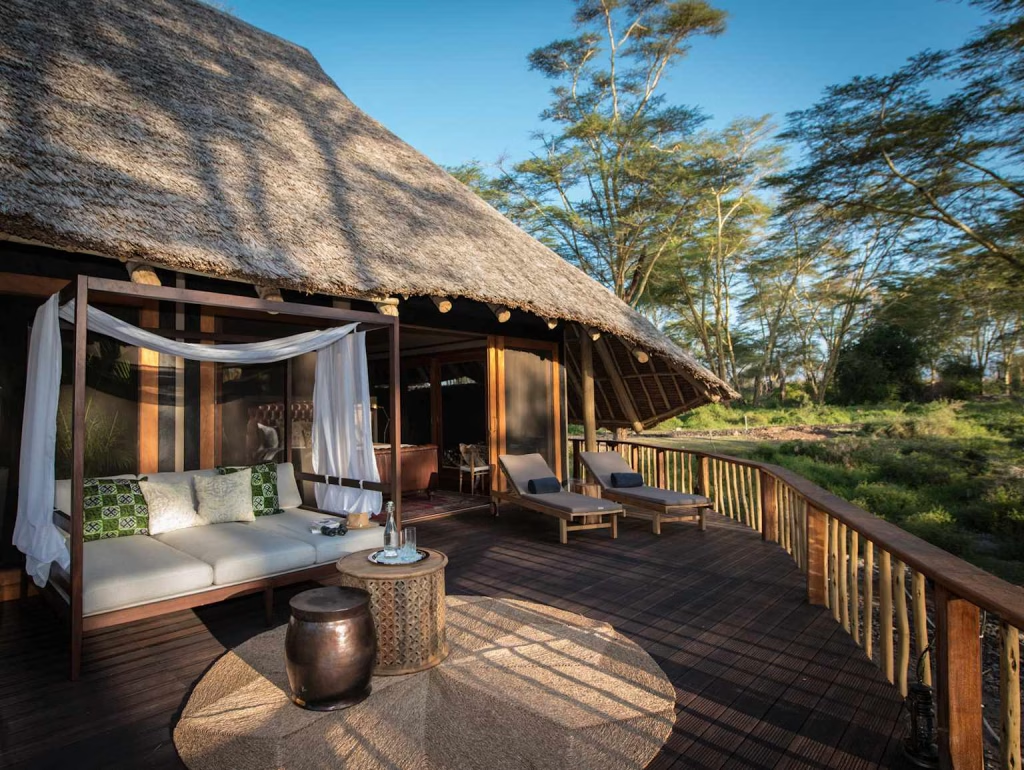
Some lodges offer waterhole viewing, sundowners, bush meals, spa treatments, guided activities, or scenic decks. These experiences can help balance early starts and long drives.
Why lodge time matters
A packed safari can become tiring. Tsavo West roads, heat, and distances can wear guests down.
A good lodge break helps you enjoy the next drive more. It also gives children, older travelers, and photographers time to rest.
Lodge experiences to consider
Depending on your accommodation, you may enjoy:
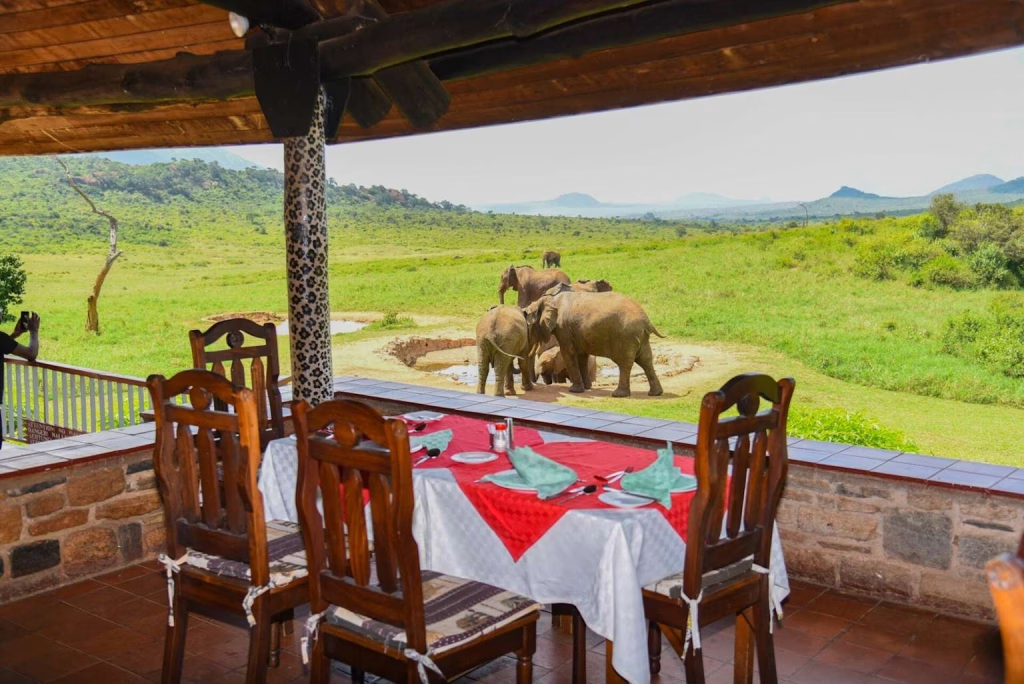
Waterhole viewing during lunch
A sunset drink with hill views
A bush breakfast after an early drive
A quiet deck for birding
A spa treatment after a long route
A guided nature talk from lodge staff
These are useful things to do in Tsavo West because they make the safari feel complete. The lodge becomes part of the experience, not just a place to sleep.
11. Add a Night Game Drive Near Tsavo West
A night drive can be one of the most exciting things to do in Tsavo West’s wider area. However, it needs careful wording and planning.
Night drives are not a standard activity everywhere inside the national park. They are usually linked to private sanctuaries or conservancy areas near the park.
Voyager Ziwani says it sits in a game-rich private sanctuary that allows night game drives. It also neighbors Tsavo West National Park for daytime game drives.
Why night drives are different
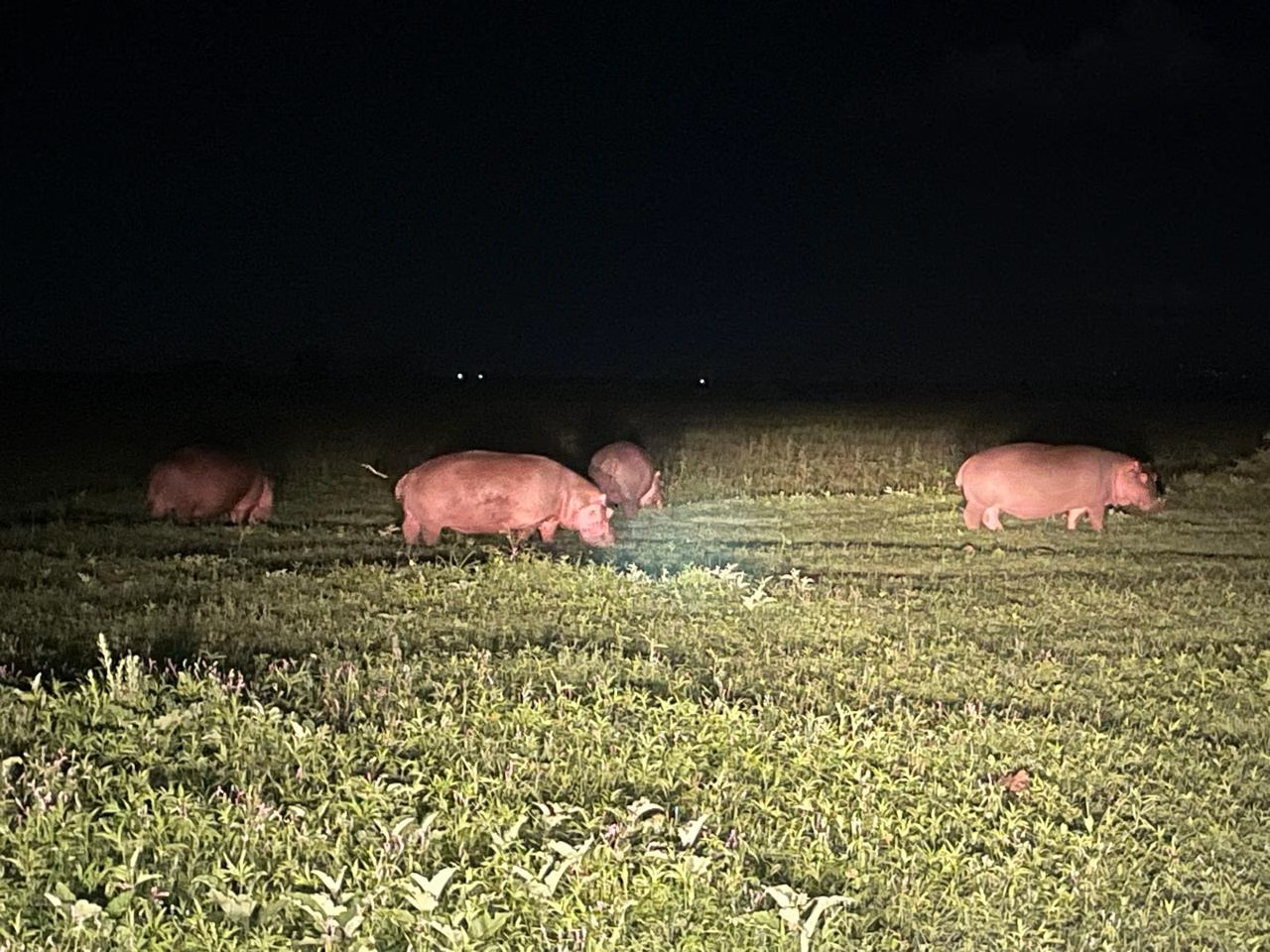
At night, the bush changes. Some animals become active. Sounds feel sharper. The guide uses a spotlight under local rules.
You may look for nocturnal species, resting birds, smaller mammals, or predator movement. Sightings vary, but the mood is often memorable.
Who should add this activity?
A nearby night drive suits:
Repeat safari travelers
Families with older children
Wildlife lovers interested in nocturnal behavior
Guests staying near Ziwani or private sanctuary areas
Travelers who want a wider Tsavo circuit
This is one of the best things to do in Tsavo West’s wider region when your accommodation and route support it.
Bonus: Combine Tsavo West with Tsavo East, Amboseli, or the Coast
One of the smartest things to do in Tsavo West is to combine it with another destination. The park connects well with Nairobi, Mombasa, Amboseli, Tsavo East, Taveta, and Taita Hills.
KWS lists road access through Chyulu Gate from Amboseli, Mtito Andei Gate from Nairobi, Tsavo Gate near Manyani from Mombasa, and Maktau, Ziwani, and Jipe gates from the Taveta-Voi road.
A Tsavo West and Tsavo East safari gives two different moods. Tsavo East offers broad plains, red elephants, and open landscapes. Tsavo West adds springs, lava, hills, rhinos, and viewpoints. You can compare the two parks in Campo’s Tsavo East National Park guide.
An Amboseli and Tsavo West safari works well for Kilimanjaro views, elephants, and volcanic landscapes. A Tsavo West and coast route works well for travelers flying into or out of Mombasa.
For broader planning, use Campo’s Kenya safari destinations guide to compare parks and route options.
Best Two-Day Plan for Things to Do in Tsavo West
A two-day plan should not try to cover everything. Focus on variety and flow.
Day 1: Arrival, game drive, and sunset views
Enter through the gate that fits your lodge. After check-in and lunch, start with an afternoon game drive.
Add Roaring Rocks or Poacher’s Lookout if route and timing allow. Return to the lodge before dark.
Day 2: Springs, lava, and wildlife
Start with an early game drive. Then visit Mzima Springs for clear water, shade, and wildlife.
After lunch, visit Shetani Lava Flow or Chaimu Hill. End with a slow evening drive.
This plan includes several major things to do in Tsavo West without making the day feel rushed.
Best Three-Day Plan for Things to Do in Tsavo West
Three days give you better pacing. They also allow more time for Ngulia, Lake Jipe, or a nearby private sanctuary.
Day 1: Scenic arrival and first game drive
Arrive, settle in, and take a late afternoon drive. Use this day to learn the landscape.
Day 2: Core Tsavo West highlights
Visit Mzima Springs, Shetani Lava Flow, Chaimu Hill, and a viewpoint. Adjust the order based on lodge location.
Day 3: Conservation, birds, or nearby sanctuary
Use the third day for Ngulia Rhino Sanctuary, Lake Jipe, or a nearby night-drive area.
This is the better plan for travelers who want detailed things to do in Tsavo West without losing comfort.
Want to experience the best things to do in Tsavo West without wasting time on poor routing? Let Campo East Africa Safaris plan your game drives, lodge choice, attraction order, and safari circuit. Start with our Wildlife Safari options, or contact us to build a custom Tsavo West itinerary.
FAQs About Things to Do in Tsavo West
What are the best things to do in Tsavo West?
The best things to do in Tsavo West include game drives, Mzima Springs, Shetani Lava Flow, Chaimu Hill, Ngulia Rhino Sanctuary, Roaring Rocks, Poacher’s Lookout, Lake Jipe, and bird watching.
Can you visit Mzima Springs on a Tsavo West safari?
Yes. Mzima Springs is one of the main things to do in Tsavo West. It is known for clear water, hippos, crocodiles, fish, monkeys, and birdlife.
Can you walk on Shetani Lava Flow?
Visitors can explore parts of Shetani Lava Flow with care and guidance. Wear closed shoes because the lava rock can be sharp and hot.
Are night game drives allowed in Tsavo West?
Night drives are not standard everywhere inside the national park. Nearby private sanctuaries, such as Voyager Ziwani, may offer night drives under their own rules.
Is Tsavo West good for bird watching?
Yes. Bird watching is one of the best things to do in Tsavo West. KWS lists 600 recorded bird species in the park.
How many days do you need in Tsavo West?
Two nights are enough for key highlights. Three nights are better for slower game drives, birding, Ngulia Rhino Sanctuary, Lake Jipe, and nearby sanctuary activities.
Is Tsavo West better than Tsavo East?
Tsavo West is better for scenery, springs, lava, rhinos, hills, and viewpoints. Tsavo East is better for open plains, red elephants, and vast wilderness.
Tsavo West accommodation can shape your safari because lodge location affects game drives, scenery, travel time, and daily comfort.
Choosing where to stay is not a small detail. Tsavo West is rugged, scenic, and spread across volcanic hills, lava flows, springs, and wooded plains. A lodge near Mzima Springs may suit one guest. A lodge near Ngulia may suit another. A nearby private sanctuary may suit travelers who want night drives.
The best Tsavo West accommodation depends on your route, budget, safari pace, and travel style. It also depends on whether you want to stay inside the park or nearby. Kenya Wildlife Service lists Finch Hatton’s, Voyager Safari Camp, Kitani Severin Safari Camp, Ngulia Safari Lodge, Kilaguni Serena Lodge, and Rhino Valley among privately owned lodges and camps linked to Tsavo West. KWS also lists Kamboyo Guest House, campsites, and self-catering options for budget travelers.
For a wider park overview before choosing a lodge, read our Tsavo West National Park safari guide. It explains routes, gates, wildlife, attractions, and the best time to visit.
How to Choose Tsavo West Accommodation
Good Tsavo West accommodation starts with location. The park has different access points, including Mtito Andei, Tsavo, Chyulu, Maktau, Ziwani, and Lake Jipe gates. KWS places Tsavo West about 240 km from Nairobi and 250 km from Mombasa through Mtito Andei Gate.
This matters because Tsavo West is not a compact park. A poor lodge choice can create long transfer days. A smart lodge choice keeps your safari relaxed.
Inside the park or nearby?
Inside-park Tsavo West accommodation gives faster access to park roads and attractions. It is best for guests focused on Mzima Springs, Shetani Lava Flow, Chaimu Hill, Roaring Rocks, and Ngulia Rhino Sanctuary.
Nearby Tsavo West accommodation can add variety. A private sanctuary can offer night drives where allowed. A Taita Hills stay can add waterhole viewing, big views, and a different landscape.
Choose inside the park when you want:
Shorter morning game-drive starts
More direct access to park attractions
A classic national park safari feel
Better use of sunrise and sunset light
Choose nearby accommodation when you want:
Night drives in a private sanctuary
Extra scenery outside the park
Easier links to Taita Hills or Taveta
A slower lodge-based safari pace
Match the lodge to your safari goal
Do not choose Tsavo West accommodation by price alone. First ask what you want the lodge to do.
For a first safari, choose a lodge with comfort, views, and easy game drives. For a honeymoon, choose space, privacy, and strong service. For photography, choose a lodge with waterhole, escarpment, or Kilimanjaro views. For families, choose room flexibility and child-friendly spaces.
For a wider Kenya route, compare Tsavo West with Tsavo East National Park. Tsavo East offers open plains and red elephants. Tsavo West offers springs, lava, hills, rhinos, and stronger scenic variety.
Inside-the-park Tsavo West accommodation works best when your trip is short. It also works well when you want to spend less time transferring between gates, lodges, and attractions.
These stays put you closer to the park’s core safari mood. You wake up inside the wilderness. You leave for drives without first entering through a gate. That can make mornings smoother.
1. Kilaguni Serena Safari Lodge
Kilaguni Serena is one of the best-known Tsavo West accommodation choices. It suits travelers who want classic lodge comfort without losing the wild feeling of the park.
The lodge sits in Tsavo West National Park beneath the Chyulu Hills. Serena describes it as one of the first lodges in Kenya’s national parks. Its central feature is a waterhole where wildlife may gather through the day.
This Tsavo West accommodation option is strong for first-time visitors. It gives structure, comfort, and scenic views. Guests do not need to choose between a good lodge experience and good safari access.
What stands out
Kilaguni Serena has 56 guest rooms, including five suites. The rooms face the waterhole and Chyulu Hills. The lodge uses volcanic stone and wood, which fits Tsavo West’s lava landscape.
This is a good lodge for guests who enjoy watching wildlife between drives. A waterhole-facing lodge can keep the safari going during lunch, tea, or rest time.
Best for
Kilaguni Serena is best for:
First-time safari travelers
Families who want comfort
Guests who prefer lodge structure
Travelers who value waterhole views
Visitors combining Tsavo West and Amboseli
What to consider
Kilaguni Serena can feel busier than smaller tented camps. That is not a weakness for everyone. Some travelers prefer a larger lodge with more services.
Choose this Tsavo West accommodation if you want a polished stay, scenic setting, and easy safari rhythm.
2. Finch Hattons
Finch Hattons is luxury Tsavo West accommodation for travelers who want a high-end safari experience. It is best for honeymoons, anniversaries, milestone trips, and guests who want privacy.
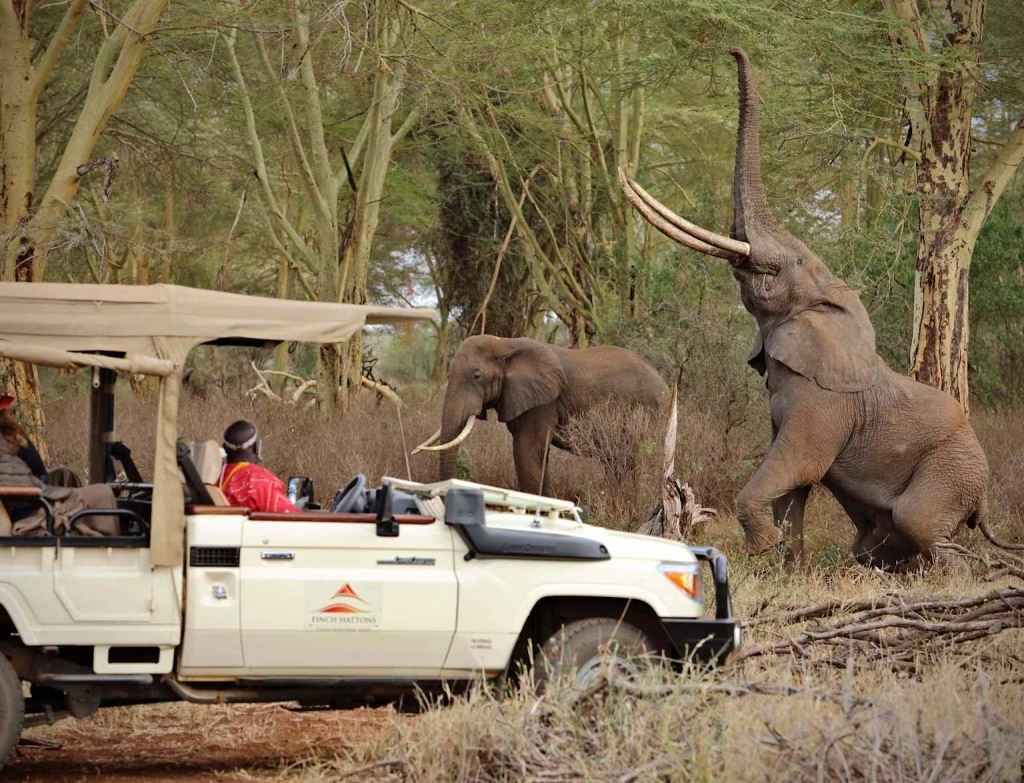
The camp is inside Tsavo West National Park at the foot of the Chyulu Hills. Finch Hattons has 17 luxury tented suites. The suites look toward natural springs, and the camp has views of Mount Kilimanjaro and the Chyulu Hills.
This Tsavo West accommodation option is not a basic tented camp. It is designed for guests who want safari atmosphere with fine comfort.
What stands out
The setting is the main draw. Natural springs soften the landscape. Chyulu Hills add depth. Kilimanjaro views can appear when weather is clear.
Finch Hattons also offers twice-daily game drives in Tsavo West. That helps guests enjoy the park without losing the ease of a luxury camp.
Best for
Finch Hattons is best for:
Honeymooners
Luxury safari travelers
Guests marking a special event
Couples who want privacy
Travelers who prefer a refined tented camp
What to consider
This Tsavo West accommodation sits at the top end of the market. It may not suit travelers who want simple value. It is best when the lodge itself is part of the reason for travel.
Choose Finch Hattons when you want comfort, quiet, service, and a strong sense of place.
3. Severin Safari Camp and Kitani Bandas
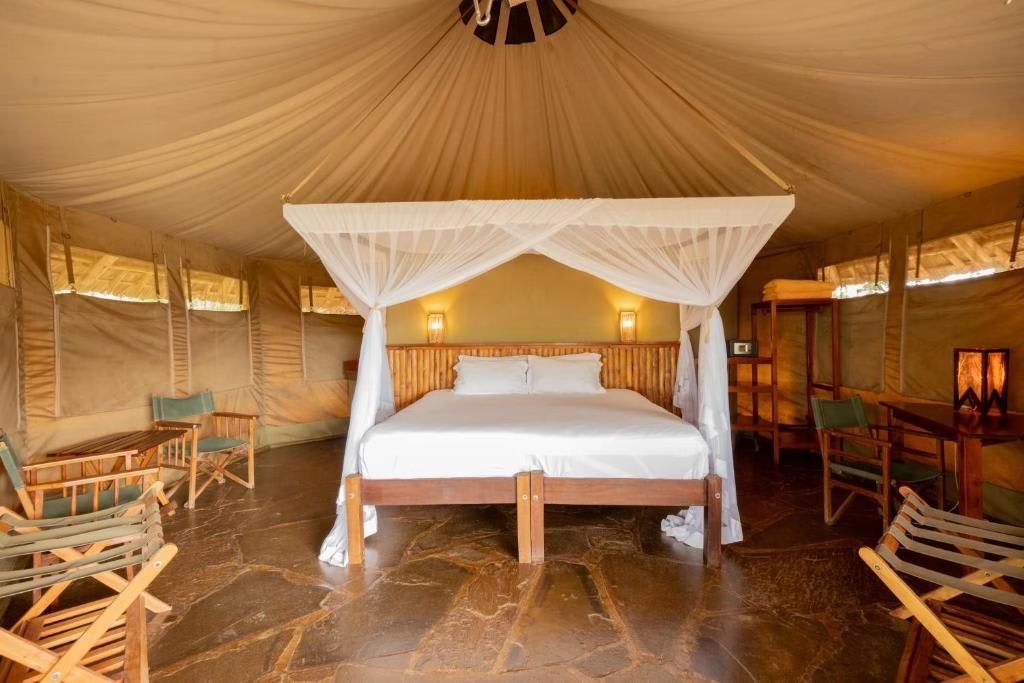
Severin Safari Camp is a strong Tsavo West accommodation choice for travelers who want the feel of a tented camp. It sits within Tsavo West National Park and opens all year. Severin highlights Kilimanjaro views, an open camp feel, and a calm wilderness setting.
This property works well because it offers different room styles. Guests can choose luxury tents, junior suites, executive suites, or Kitani Bandas.
What stands out
The luxury tents combine comfort with close contact to the bush. They include private verandas, en-suite bathrooms, hot and cold water, and savanna views.
Junior suites add more space. They suit couples who want comfort and families needing more room. Executive suites offer raised decks, sun loungers, king beds, and views toward Kilimanjaro and the Tsavo landscape.
Kitani Bandas are useful for travelers who want more independence. They offer a different style of Tsavo West accommodation while keeping access to camp facilities.
Best for
Severin Safari Camp is best for:
Couples who want tented comfort
Families needing flexible room types
Travelers who enjoy camp atmosphere
Guests who want bush meals or sundowners
Visitors who prefer a smaller feel than a large lodge
What to consider
This Tsavo West accommodation has an open camp style. That adds charm, but guests must follow staff guidance after dark.
Choose Severin when you want tented comfort, wildlife atmosphere, and good room variety.
4. Ngulia Safari Lodge
Ngulia Safari Lodge is practical Tsavo West accommodation for views, value, and access to the Ngulia side of the park. It suits photographers, mid-range travelers, and guests interested in rhino sanctuary routing.
The lodge has 52 park-facing rooms. Its rooms are en-suite and include lounge space, work areas, balconies, fans, Wi-Fi, mineral water, and toiletries.
Ngulia sits in a dramatic part of Tsavo West. The escarpment setting gives guests wide views across the park. That makes it a useful base for travelers who value scenery.
What stands out
The view is the key reason to stay here. This Tsavo West accommodation works well for guests who enjoy quiet time between drives. A balcony, escarpment, and wide sky can make midday rest feel rewarding.
Ngulia also fits routes toward Ngulia Rhino Sanctuary. KWS identifies Tsavo West as home to Ngulia Rhino Sanctuary and a growing population of endangered black rhinos.
Best for
Ngulia Safari Lodge is best for:
Mid-range safari travelers
Wildlife photographers
Guests interested in rhino conservation
Travelers who enjoy escarpment views
Visitors who want a park-facing room
What to consider
Ngulia is less polished than top luxury camps. That may suit guests who care more about views, route, and value.
Choose this Tsavo West accommodation if you want scenery, access, and a solid safari base.
5. Rhino Valley Lodge
Rhino Valley Lodge is a more rustic Tsavo West accommodation option. It is useful for travelers who want a practical base in the park. KWS lists Rhino Valley as having six self-catering cottages.
This choice can work for budget-conscious travelers, self-drive guests, and visitors who prefer simple stays. It can also suit repeat safari travelers who care more about location than extras.
What stands out
Rhino Valley’s main value is practicality. It gives guests a base inside Tsavo West. That matters when planning drives toward Ngulia, Mzima Springs, Shetani Lava Flow, or Chaimu Hill.
This Tsavo West accommodation may not offer the broad service range of larger lodges. Yet it can help keep costs controlled.
Best for
Rhino Valley Lodge is best for:
Self-drive travelers
Budget-conscious guests
Visitors who prefer simple accommodation
Repeat safari travelers
Guests focused on park access
What to consider
Choose this Tsavo West accommodation when function matters more than luxury.
Details for Rhino Valley can be less clear online than for larger lodges. Confirm room status, meals, access, and facilities before booking.
Nearby Tsavo West Accommodation Options
Nearby Tsavo West accommodation can be a smart choice. Some stays are not inside the national park, but they add experiences that park lodges may not offer.
These options work well for longer routes. They also help when combining Tsavo West with Taita Hills, Taveta, Amboseli, Tsavo East, or the coast. For more route ideas, see Campo’s Kenya safari destinations guide.
6. Voyager Ziwani Tented Camp
Voyager Ziwani is adjacent Tsavo West accommodation in a private sanctuary. It suits travelers who want a relaxed tented stay with extra activities.
The camp has newly renovated en-suite tents with private verandas. It sits in a private sanctuary that allows night game drives. It also neighbors Tsavo West National Park for day-time game drives.
This makes Voyager Ziwani a useful choice for guests who want both national park drives and private sanctuary activities.
What stands out
Night drives are the major difference. National park rules differ from private sanctuary rules. Voyager Ziwani’s setting allows nocturnal wildlife experiences in its private area.
The camp also has its own airstrip, free Wi-Fi in public areas, and access by road from Nairobi, Tsavo East, or Mombasa.
Best for
Voyager Ziwani is best for:
Families
Night-drive seekers
Relaxed tented safari guests
Travelers using the Taveta side
Guests combining Tsavo West and Tsavo East
What to consider
This is nearby Tsavo West accommodation, not inside the main park. Plan day drives with transfer time in mind.
Choose Voyager Ziwani if night drives, riverside calm, and tented comfort matter.
7. Soroi Lions Bluff Lodge
Soroi Lions Bluff Lodge is nearby Tsavo West accommodation in Lumo Community Wildlife Sanctuary. It suits travelers who want big views, privacy, and a conservancy feel.
The lodge has 12 exclusive suites. Soroi describes views across the conservancy, Tsavo, and Kilimanjaro. Guests can start the day with a game drive or bush walk.
This is a strong choice for scenic safaris. The high setting helps guests see the shape of the landscape.
What stands out
Soroi Lions Bluff is about space and views. It does not feel like a standard lodge on a busy route. It feels removed, wide, and calm.
This Tsavo West accommodation option works well for guests who want fewer rooms and a quieter rhythm. It can also suit families because the suite setup gives more space.
Best for
Soroi Lions Bluff Lodge is best for:
Scenic safari travelers
Families seeking privacy
Couples who want quiet
Photographers
Guests interested in conservancy stays
What to consider
It is not inside Tsavo West National Park. That means park visits need planning. Yet the lodge can add a strong Taita and Kilimanjaro-view element.
Choose this Tsavo West accommodation for space, views, and a slower safari mood.
8. Salt Lick Safari Lodge
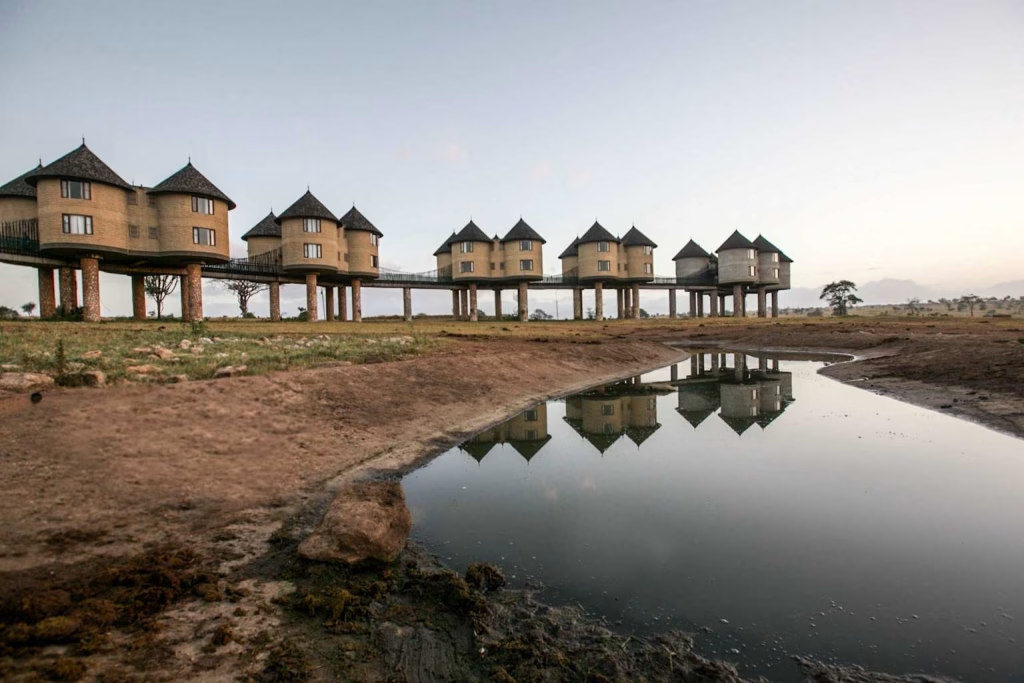
Salt Lick Safari Lodge is one of the most famous nearby Tsavo West accommodation options. It sits in Taita Hills Wildlife Sanctuary and overlooks a waterhole and the Tsavo plains.
Its stilted design makes it one of Kenya’s most recognizable safari lodges. The rooms are raised above the ground, giving guests a direct view of the waterhole area.
What stands out
The lodge has 96 elevated rooms built on stilts. Taita Hills Wildlife Sanctuary notes that the rooms are built across two levels and include en-suite bathrooms with hot and cold running water.
Salt Lick’s rooms overlook the waterhole. Room amenities include single and double beds, safes, tea and coffee makers, fans, reading tables, and furnished interiors.
This Tsavo West accommodation choice is strong for guests who want a photogenic lodge. It is also useful for travelers who want to mix park drives with waterhole watching.
Best for
Salt Lick Safari Lodge is best for:
Photographers
First-time safari guests
Families
Waterhole viewing
Travelers combining Tsavo West and Taita Hills
What to consider
Salt Lick is in Taita Hills Wildlife Sanctuary, not inside Tsavo West National Park. It works best when planned as part of a wider Tsavo circuit.
Choose this Tsavo West accommodation if lodge design and waterhole viewing are high priorities.
9. The Hildana Lodge
The Hildana Lodge is nearby Tsavo West accommodation for travelers who want quiet luxury outside the usual park-lodge pattern. It sits in the Taita area and works well as an exclusive add-on.
The lodge includes daily game drives in open shared vehicles. It also includes a guided tour of a century-old sisal factory and working estate farm. Guests can add curated experiences, including guided forest walks and cultural encounters.
This makes Hildana different from standard Tsavo West accommodation. It combines safari, estate history, forest, farm, and slow travel.
What stands out
Hildana suits travelers who want a softer close to a safari. After several days of game drives, some guests enjoy a stay with more space and fewer vehicles.
It can also suit guests traveling between Tsavo, Taita Hills, and the coast.
Best for
The Hildana Lodge is best for:
Quiet luxury
Couples
Slow safari travelers
Guests interested in farm and forest experiences
Visitors adding Taita to a Tsavo route
What to consider
This is not inside Tsavo West National Park. It is best for travelers with enough time for a broader route.
Choose this Tsavo West accommodation when privacy, calm, and varied experiences matter.
Best Tsavo West Accommodation by Traveler Type
The right Tsavo West accommodation depends on the traveler. A honeymoon couple, family, photographer, and self-drive guest will not need the same lodge.
Traveler type
Best-fit Tsavo West accommodation
Why it fits
First-time safari travelers
Kilaguni Serena, Severin, Ngulia
These stays offer comfort, access, and clear safari structure.
Luxury travelers
Finch Hattons, Kilaguni Serena suites, Hildana
These options add space, service, and strong settings.
They offer privacy, scenery, and a slower romantic pace.
Families
Kilaguni Serena, Voyager Ziwani, Soroi Lions Bluff, Salt Lick
These stays suit comfort, room space, and lodge-based downtime.
Photographers
Ngulia, Kilaguni Serena, Salt Lick, Soroi Lions Bluff
These options offer escarpment, waterhole, and wide landscape views.
Night-drive seekers
Voyager Ziwani
It sits in a private sanctuary that allows night drives.
Budget-conscious guests
Rhino Valley, Ngulia, KWS options
These can reduce cost while keeping access practical.
Conservation-minded travelers
Ngulia, Kilaguni, Finch Hattons
These can pair well with Ngulia Rhino Sanctuary routing.
Suggested Tsavo West Accommodation Routes
A good route helps you avoid wasted hours. It also helps match your lodge to the best nearby attractions.
One-night Tsavo West stop
For one night, choose Tsavo West accommodation inside the park. Kilaguni Serena, Ngulia, or Severin can work well.
Keep the program simple. Do an afternoon game drive, overnight, early morning drive, and one major attraction. Mzima Springs or Shetani Lava Flow can fit well.
Two-night scenic safari
Two nights give Tsavo West room to breathe. Choose Kilaguni Serena, Severin, Finch Hattons, or Ngulia.
Use one day for Mzima Springs, Shetani Lava Flow, and Chaimu Hill. Use another for Ngulia Rhino Sanctuary, Roaring Rocks, or Poacher’s Lookout.
Three-night Tsavo circuit
Three nights allow a richer Tsavo West accommodation plan. Spend two nights inside the park and one nearby.
For example, stay at Severin or Kilaguni first. Then add Voyager Ziwani, Soroi Lions Bluff, Salt Lick, or Hildana. This creates a safari with both park scenery and nearby sanctuary experiences.
Not sure which Tsavo West accommodation fits your route, budget, and safari style? Let Campo East Africa Safaris help you choose the right lodge and build a smooth safari plan. Contact us today to start planning your Tsavo West stay.
FAQs About Tsavo West Accommodation
Which lodges are inside Tsavo West National Park?
Inside-park Tsavo West accommodation includes Kilaguni Serena, Finch Hattons, Severin Safari Camp, Ngulia Safari Lodge, Rhino Valley, and KWS options.
Is Kilaguni Serena inside Tsavo West?
Yes. Kilaguni Serena is inside Tsavo West National Park. It is known for waterhole views, Chyulu Hills scenery, and classic lodge comfort.
Is Finch Hattons in Tsavo West?
Yes. Finch Hattons is inside Tsavo West National Park. It offers luxury tented suites near natural springs.
Where can you do night game drives near Tsavo West?
Voyager Ziwani offers night game drives in its private sanctuary. It neighbors Tsavo West for day-time park drives.
Which Tsavo West accommodation is best for families?
Kilaguni Serena, Voyager Ziwani, Soroi Lions Bluff, and Salt Lick can suit families. The best choice depends on budget and route.
Which Tsavo West accommodation is best for seeing rhinos?
Ngulia Safari Lodge is practical for Ngulia Rhino Sanctuary routing. However, rhino sightings are never guaranteed.
Is nearby accommodation worth it?
Yes, nearby Tsavo West accommodation can be worth it. It can add night drives, waterhole viewing, conservancy scenery, or Taita Hills experiences.
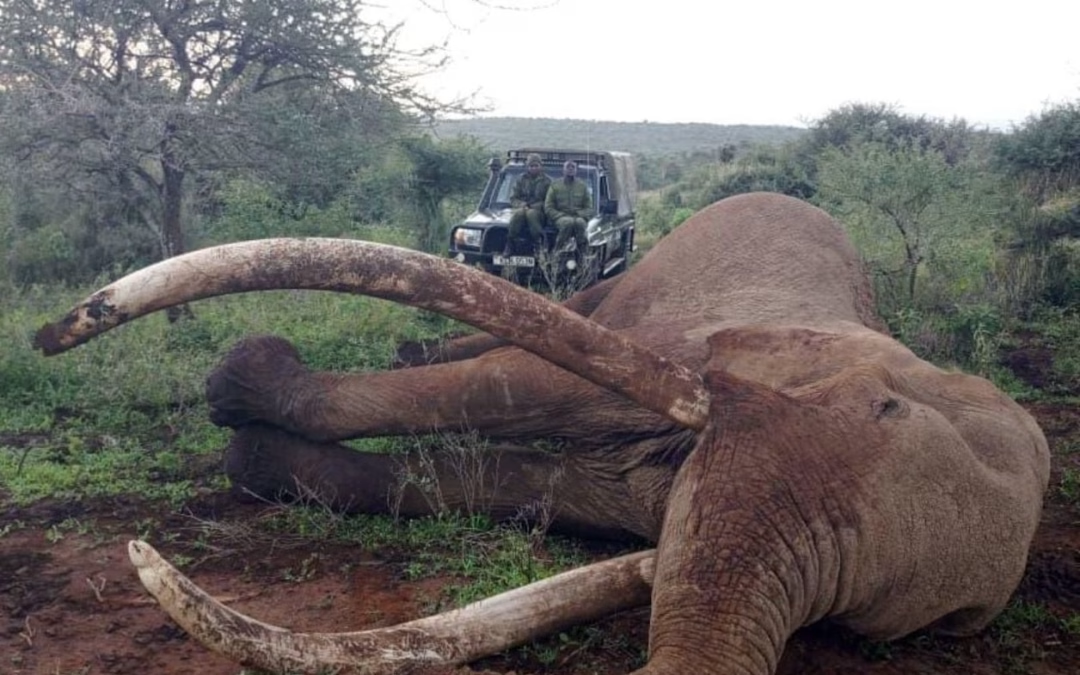
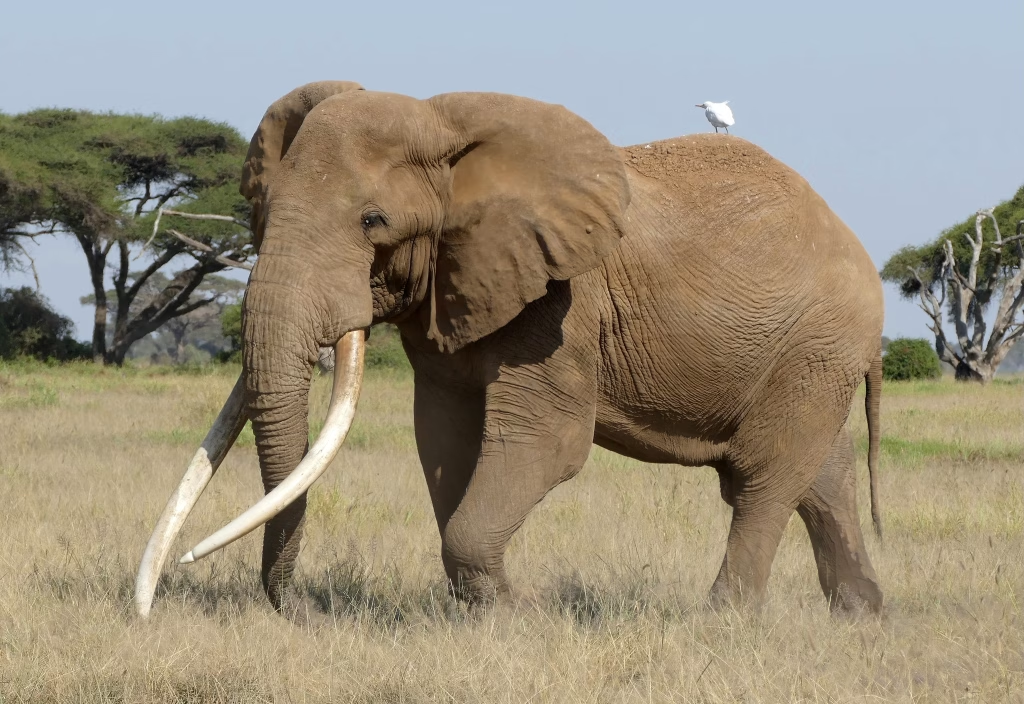
Craig, the Amboseli elephant and the celebrated super tusker, died early Saturday, Jan. 3, 2026, officials said. Kenya Wildlife Service confirmed the death in Amboseli National Park after rangers found him motionless. Craig was 54, and among Africa’s last bulls with ground-sweeping tusks. Conservation groups said he likely died of natural causes, after months of age-related digestive trouble.
His passing closes a long chapter for Amboseli, where the Craig drew tourists and pride from local families. Amboseli Trust for Elephants traced his birth to January 1972, to Cassandra of the CB family.
Craig Death Confirmed
The Kenya Wildlife Service said Craig died within the Amboseli ecosystem, near community land that borders the park.
Big Life Foundation said he had shown serious digestive issues, and age makes recovery hard for bulls. Officials did not report signs of poaching, and his tusks remained intact.
Early this morning, Amboseli National Park, Kenya - and indeed the world - lost a true icon. Craig, the legendary super tusker famed for its immense,… pic.twitter.com/4Xnl5uwNPv
In Kenya, poachers have long targeted big tuskers, so his peaceful end felt like a rare relief.
A life shaped by the CB family
Craig belonged to the well-studied CB family, a lineage followed for decades by researchers. He was born to Cassandra, a matriarch known for leading her relatives through drought and danger. Some researchers suspected he had a twin sister, Cerise, who later became the CB matriarch. That link is not confirmed, but the idea stayed because Craig and Cerise were close in age. He matured into a calm bull, and guides often described him as patient around vehicles.
Why Craig Mattered
Craig was a “super tusker,” a bull with tusks that can weigh over 45 kilograms. Such elephants are rare now, because big tusks bring danger from poachers and trophy hunters.
Craig in his element
In 2021, East African Breweries even adopted Craig as a symbol for Tusker beer, reports said. To many Kenyans, he stood for a conservation story that worked, with rangers and communities holding the line. The Associated Press noted Kenya’s elephant numbers have risen in recent years, a trend Craig helped embody.
Much of the Craig's range overlapped farms and grazing land, so protection depended on trust. Conservationists said community scouts and park rangers tracked him often, and they responded fast to threats. Big Life Foundation said false death rumors last November were wrong, but they showed how watched he was.
Now, those protectors are also mourners, remembering the Craig Amboseli elephant as gentle, but never weak.
His death also recalls that of Tolstoy, another Amboseli bull whose natural death in 2022 that we reported on, prompted fresh calls for vigilance.
Craig likely sired many calves, and his genes will remain in Amboseli herds for years. Still, super tuskers are not replaced easily, because few bulls live long enough to grow tusks like that. Officials said they will continue monitoring other big bulls, and they urged visitors to respect viewing rules.
Visit Amboseli with Campo East Africa Safaris
If you want to see Amboseli’s elephants and learn their stories, travel with guides who know this place well. Campo East Africa Safaris can arrange a smooth trip, including our Visit Amboseli 3 Days safari. Explore the package, and let our professional team handle permits, timing, and safe viewing.
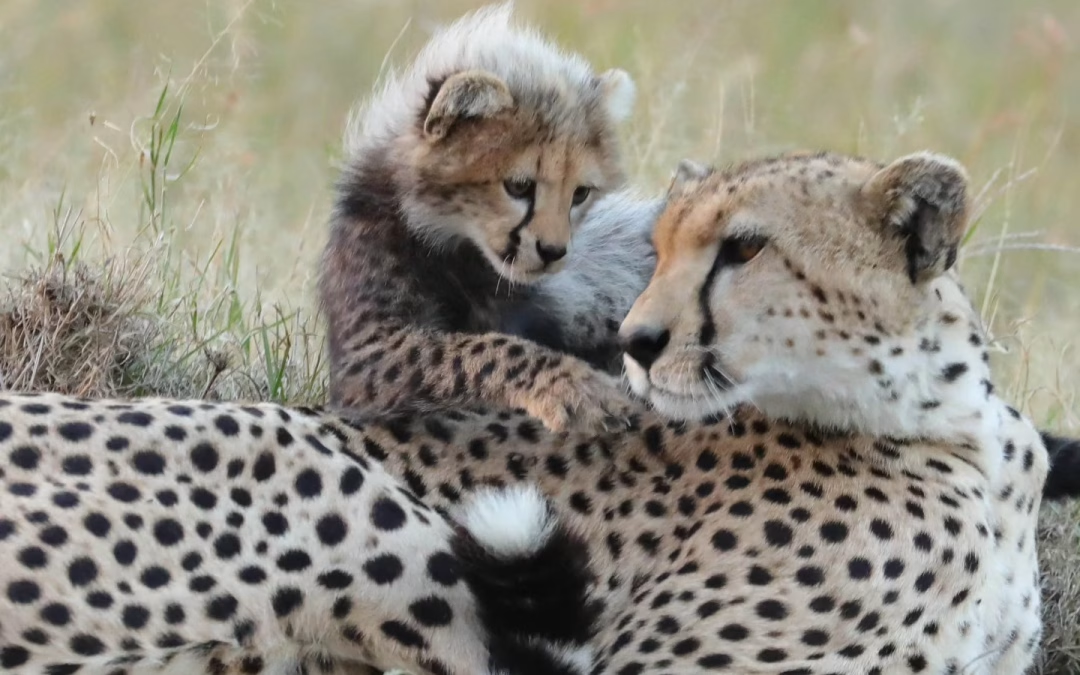
MAASAI MARA, Kenya — The Maasai Mara has lost one of its most iconic big cats. Nora the Queen, believed to be the oldest female cheetah in the Mara ecosystem at 13.5 years, was tragically killed in a rare and brutal encounter with a leopard known locally as Bella 2. The fatal attack occurred as she was crossing a dry riverbed, shocking guides and researchers who had never expected such a seasoned and resilient cheetah to fall in this way.
Nora’s passing comes amid a cheetah population of approximately 72 individuals in the Maasai Mara and surrounding conservancies — a number that highlights both the Mara’s status as a key stronghold for this vulnerable species and the constant threat they face from larger predators.
A Matriarch of the Mara
Born in April 2012 to her mother, Narasha, and sister to Nur, Nora rose to prominence over more than a decade in the Mara. Throughout her life, she mated largely with members of the famous Tano Bora cheetah coalition, and was known to have one surviving male cub, now about ten years old.
Tragically, one of the most dramatic moments in the Tano Bora saga also involved Nora: when Olpadan, a dominant member of that coalition, returned from a mating excursion with her, his own coalition mates rejected him, leading to his eventual death — a story that became part of Mara folklore.
A Sudden and Unexpected End
Despite her age and experience, Nora did not survive the ambush by Bella 2, a leopardess known for her stealth and power. Cheetahs are typically sensitive to the presence of other big cats, often avoiding confrontation, but guides were taken by surprise: many had assumed that, given her maturity, Nora would either defend herself or flee swiftly. F
Leopard attacks on adult cheetahs are rare but not unheard of; leopards are stronger, more muscular predators that can overpower cheetahs, especially older ones whose senses and reflexes have begun to fade.
Legacy of a Queen
Nora’s remarkable life was defined by survival, motherhood, and the hard realities of life on the Mara plains. She was respected by guides, beloved by wildlife watchers, and admired for her tenacity. Now, as the Mara mourns her loss, her story underscores the fragility of cheetah lives in a land dominated by lions, hyenas, and now, powerful leopards.
Rest in peace, Nora the Queen — long may your legacy run through the grasses of the Mara.
In the remote wilds of northern Kenya, where dusty plains meet rugged mountains and seasonal rivers carve ancient paths, a quiet revolution in conservation is taking place. Reteti Elephant Sanctuary Kenya is not just a refuge for orphaned elephants—it's a symbol of hope, resilience, and the power of community. Here, rescued calves are nurtured by the very people whose ancestors once viewed elephants as competitors. Today, they are caretakers, storytellers, and proud guardians of Samburu heritage.
In this blog, you'll discover why Reteti is a must-visit destination—how to get there, what makes it extraordinary, the rare wildlife you can expect to see, and the unforgettable cultural encounters that await. Whether you're planning a full northern Kenya safari or seeking one of the most meaningful wildlife experiences in Africa, Reteti deserves a place on your itinerary.
Where is Reteti Elephant Sanctuary Kenya Located?
Tucked within the vast landscapes of northern Kenya, Reteti Elephant Sanctuary Kenya lies in the heart of the Namunyak Conservancy. This remote, community-owned sanctuary is surrounded by dramatic mountains, seasonal rivers, and a semi-arid climate that defines the Samburu wilderness.
Its location makes it an ideal stopover during a northern Kenya safari. The sanctuary is just a 2-hour drive from most lodges and camps in Samburu National Reserve, including popular names like Elephant Bedroom Camp, Lion King Camp, Samburu Intrepid, and Soroi Samburu Lodge.
From Buffalo Springs Game Reserve, which includes Surana Camp and Ashnil Samburu Camp, the journey takes about 2.5 hours. Shaba National Reserve, with its iconic Sarova Shaba Game Lodge and Joy Camp, is also within 2.5 hours reach.
Kalama Conservancy’s Basecamp Saruni Camp is only 1.5 hours away, while Sabache Eco-Camp, at the base of Mount Ololokwe, is just 1 hour from Reteti. Nearby conservancies like Sera (Rhino Wild Camp) and Namunyak (Sarara Camp) are each about 1 to 1.5 hours away.
If you're staying at Reteti House or Reteti Cottages, you're in luck—the sanctuary is a short 20-minute walk away.
What Makes Reteti Elephant Sanctuary Special?
Unlike most wildlife sanctuaries, Reteti Elephant Sanctuary Kenya stands out for one extraordinary reason—it is the first community-owned and operated elephant orphanage in Africa. It is a place where local Samburu men and women are trained as caregivers, veterinary assistants, and conservationists, creating a rare synergy between people and wildlife.
Every elephant calf rescued here has a name, a story, and a second chance. Most are victims of drought, human-wildlife conflict, or abandonment. At Reteti, they are hand-fed, monitored, and rehabilitated with the ultimate goal of returning them to the wild. The emotional bond between keepers and calves is not only heartwarming—it’s a powerful narrative of healing, both for the animals and the community.
Guests can witness the feeding sessions, learn about elephant behavior, and explore how traditional Samburu knowledge blends with modern conservation science. Being here isn’t about passive observation—it’s an immersive, eye-opening encounter that changes how you see wildlife forever.
Wildlife Viewing Around Reteti Elephant Sanctuary
While Reteti’s elephants are the main attraction, the surrounding wilderness teems with some of the most unique and elusive wildlife in East Africa. The sanctuary sits within the greater Namunyak Conservancy, a region that offers rich biodiversity and excellent game drive opportunities for adventurous travelers.
Expect to encounter northern Kenya’s signature species, including the striking reticulated giraffe, the elegant Grevy’s zebra, and the long-necked gerenuk, often seen browsing on their hind legs. These animals are specially adapted to arid environments and are rarely found in southern parks like the Maasai Mara.
But what truly sets this area apart are the rare and often shy creatures that call it home. Keep your eyes peeled for striped hyenas, naked mole-rats, and packs of wild dogs—all of which are difficult to spot elsewhere in Kenya. Birders will also find the area rewarding, with species like the vulturine guinea fowl, Somali ostrich, blue-naped mousebird, and Somali crombec adding bursts of color to the rugged landscape.
For those who crave intimate, off-the-beaten-path wildlife experiences, Reteti delivers on every level—without the crowds found in more famous parks.
Adventure Activities and Cultural Encounters
A visit to Reteti Elephant Sanctuary Kenya opens the door to far more than wildlife viewing—it’s also a gateway to authentic Samburu culture and rugged northern adventures.
For those drawn to landscapes, a hike up Mount Ololokwe—a sacred mountain to the Samburu people—is a must. Accessible via Sabache Eco-Camp, the climb rewards you with sweeping views across the arid plains and a sunrise that lingers in memory. If you prefer the skies, helicopter safaris to Lake Turkana’s Central Island or the remote Chalbi Desert offer cinematic views of Kenya’s northern frontier.
Cultural immersion is a cornerstone of the Reteti experience. Visit a Samburu singing well, a traditional water-harvesting system where herders sing to their livestock as they draw water—best seen during the dry season at Namunyak Conservancy or Ndonyo Wasin. You can also enjoy a bush breakfast or sundowner in the wild, surrounded by the scent of acacia and the sounds of distant bird calls.
For a deeper connection, tour nearby villages or visit local schools in Seriolipi, Lerata, and Ndonyo Wasin, supported by Thorntree.org, a nonprofit working with Samburu communities. These moments offer a chance to understand life in this remote region from those who live it.
Getting to Reteti Elephant Sanctuary
Reaching Reteti Elephant Sanctuary Kenya is part of the adventure. Nestled deep within the Namunyak Conservancy, the sanctuary is accessible by both road and air—but whichever route you choose, a 4x4 vehicle is essential due to the rugged terrain and unpaved tracks.
For those flying in, options include scheduled or charter flights to Kalama Airstrip or small private charters to Sarara Airstrip and Reteti Airstrip, the closest landing strip to the sanctuary itself. Most safari itineraries that include Samburu, Shaba, or Buffalo Springs make Reteti a convenient northern extension.
If you’re traveling by road, you’ll be greeted by hot, arid conditions typical of this part of Kenya. The landscape is raw and beautiful, dotted with dry riverbeds, rocky hills, and dense thickets that give way to wide, open plains. During the rainy season, seasonal rivers may swell, so planning your journey with an experienced guide is recommended.
Despite the remoteness, the journey is worth every kilometer. Along the way, you’ll pass through traditional Samburu settlements and may even spot wildlife crossing your path before you arrive at this one-of-a-kind sanctuary.
Why Reteti is a Must-Visit on Your Northern Kenya Safari
In a country known for world-famous reserves like the Maasai Mara and Amboseli, Reteti Elephant Sanctuary Kenya offers something refreshingly different—a raw, immersive safari experience far from the usual tourist trails. It’s not just about spotting wildlife; it’s about understanding the deep relationships between people, animals, and the land.
Here, you get the chance to witness rare mammals like striped hyenas, naked mole-rats, and the elusive African wild dog in their natural habitat. But what makes Reteti truly stand out is the sense of purpose woven into every visit. Every interaction supports local conservation efforts, empowers Samburu communities, and contributes to a broader mission of coexistence between wildlife and people.
Combining a visit to Reteti with other destinations like Samburu National Reserve, Buffalo Springs, or Shaba National Reserve creates a well-rounded northern Kenya safari rich in wildlife, culture, and conservation. Whether you're a photographer, conservation traveler, or simply someone seeking meaningful travel, Reteti offers something few places can—connection.
Plan a Seamless Visit with Experts in Northern Kenya Safaris
Planning a visit to Reteti Elephant Sanctuary Kenya isn’t just about booking a destination—it’s about crafting a journey through one of Africa’s last truly wild frontiers. Remote, rugged, and rich in cultural heritage, Namunyak Conservancy requires a deep understanding of local logistics, seasons, and access routes.
That’s where experienced safari planners come in. With so many moving parts—from charter flights and 4x4 transfers to conservation fees and community protocols—it pays to work with a team that knows northern Kenya inside and out.
At Campo East Africa Safaris, we specialize in designing tailor-made itineraries that connect guests with the untouched beauty of places like Reteti. Whether you're combining your visit with Samburu, Shaba, or simply want an exclusive stay near Reteti House or Reteti Cottages, our team can curate every detail.
Ready to explore this remarkable sanctuary and its surrounding wildlands? Contact us today to start building your custom Reteti adventure.



Recent Comments